Is It Cheaper to Embroider or Print?
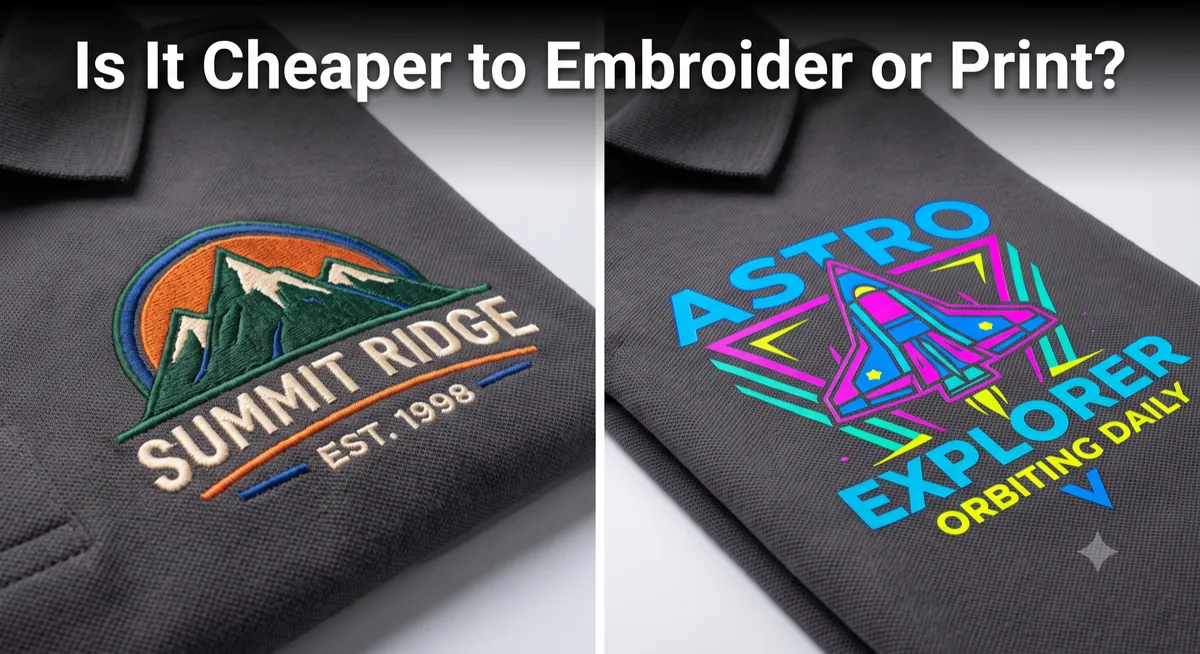
There's no single answer here — it genuinely depends on your design, quantity, and what you're printing on. Here's how the two methods actually compare on cost, so you can figure out which makes more sense for your project.
Why Embroidery and Printing Price Out Differently
Embroidery pricing is based mainly on stitch count and a one-time digitizing fee — the design gets stitched directly into the fabric with thread. Printing methods (screen printing, DTF) price based more on the number of ink colors (for screen printing) or design size (for DTF), with setup costs that behave differently than embroidery's digitizing fee.
When Embroidery Tends to be Cheaper
Small designs at low-to-moderate quantities — a small logo (like a left-chest design) is often cost-competitive or cheaper with embroidery than printing, especially once you factor in printing's per-color screen setup costs for multi-color designs.
One-off or very small orders — DTF transfers or embroidery can both work well here, but embroidery avoids per-color screen setup fees entirely, which matters more the more colors your design has.
When Printing Tends to be Cheaper
Large designs and full-coverage graphics — printing methods generally handle large, detailed, full-color designs more cost-effectively than embroidery, where stitch count (and therefore cost) scales up fast with design size and detail.
High-volume single-design orders — screen printing in particular gets significantly cheaper per unit at higher quantities, since the main cost (screen setup) is spread across more shirts.
Photorealistic or highly detailed designs — these are difficult or impossible to embroider well, and printing (especially DTF, which handles full color easily) is the more practical choice.
If you're deciding between the two for a hat specifically, our 3D embroidery hats guide and custom DTF transfers guide go deeper on each method individually.
Other Factors Besides Price
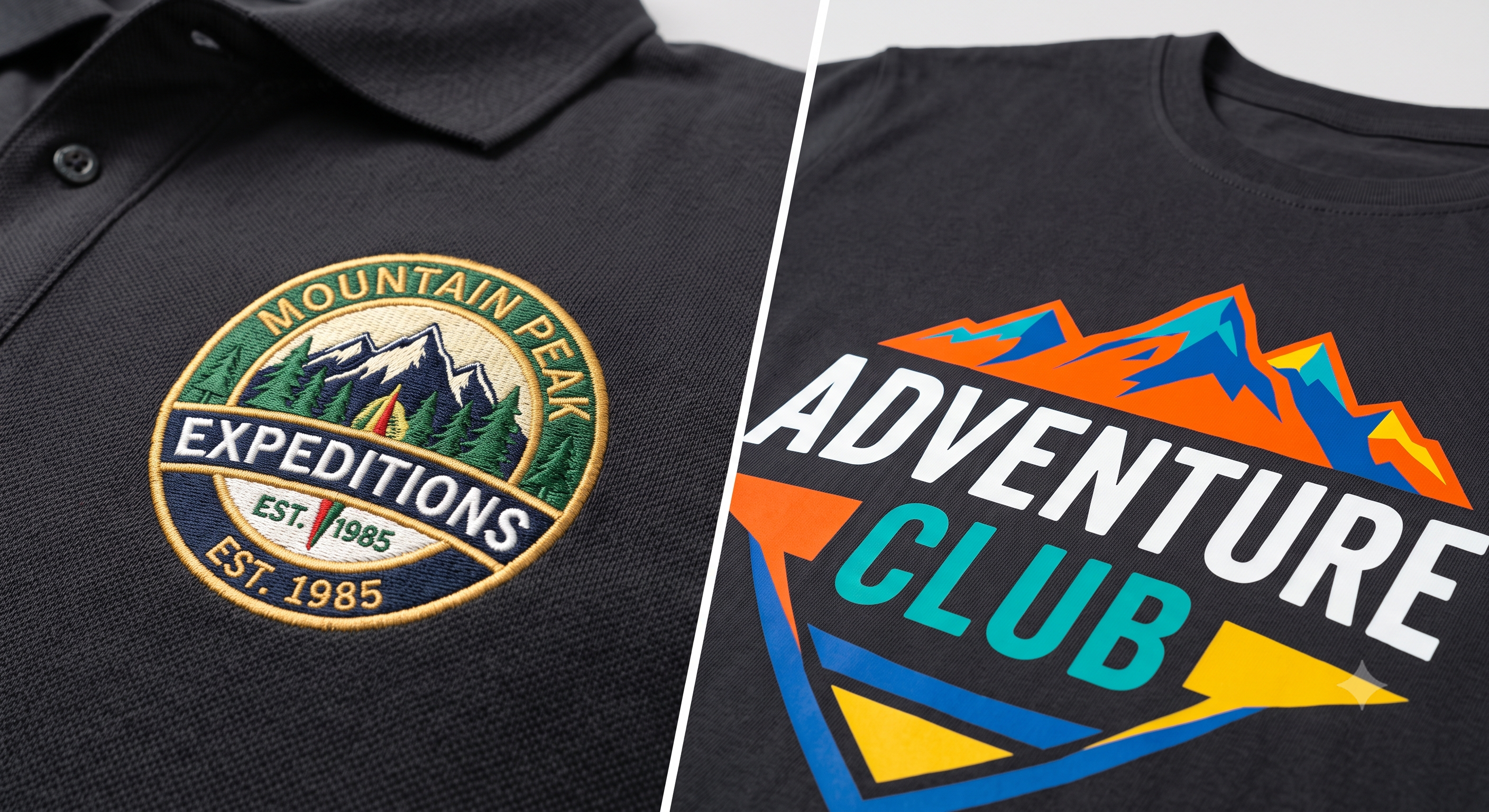
Cost isn't the only consideration — embroidery tends to look more premium and durable on structured items like hats and polos, while printing is usually the better fit for large, colorful graphics on t-shirts. Feel and durability matter too: embroidery holds up extremely well over time, while print quality varies more by method and garment care.
Get a Real Comparison for Your Project
The only way to know for sure which is cheaper for your specific design and quantity is to get pricing on both. Contact WC Apparel for a quote with your design and we'll tell you honestly which method makes more sense for your budget and goals.
FAQ
Is embroidery more durable than printing?
Generally yes — embroidery holds up to washing and wear extremely well since the thread is stitched into the fabric rather than sitting on the surface, though quality screen printing and DTF can also be quite durable when done correctly.
Can you combine embroidery and printing on the same order?
Yes — some brands use embroidery for logos on hats/polos and printing for larger graphic designs on t-shirts within the same overall order or product line.
Which is better for a small business logo?
It depends on where it's going — embroidery is a strong choice for polos, hats, and jackets, while printing is usually better suited to t-shirts and larger graphic placements.