
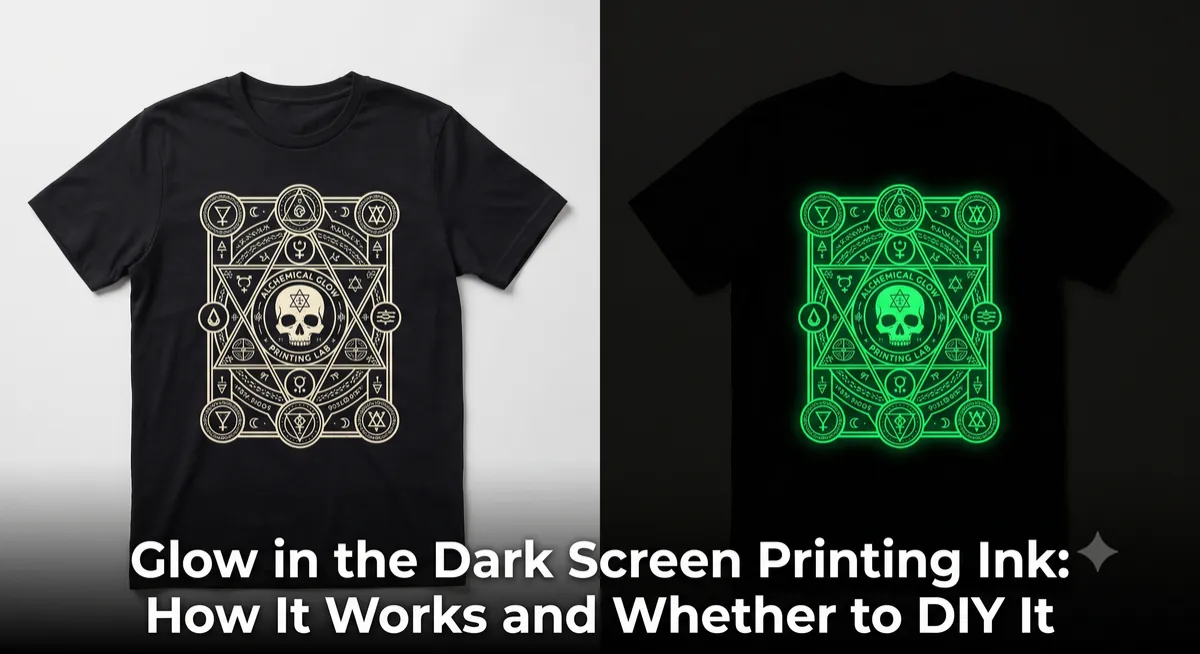
Glow in the Dark Screen Printing Ink: How It Works and Whether to DIY It
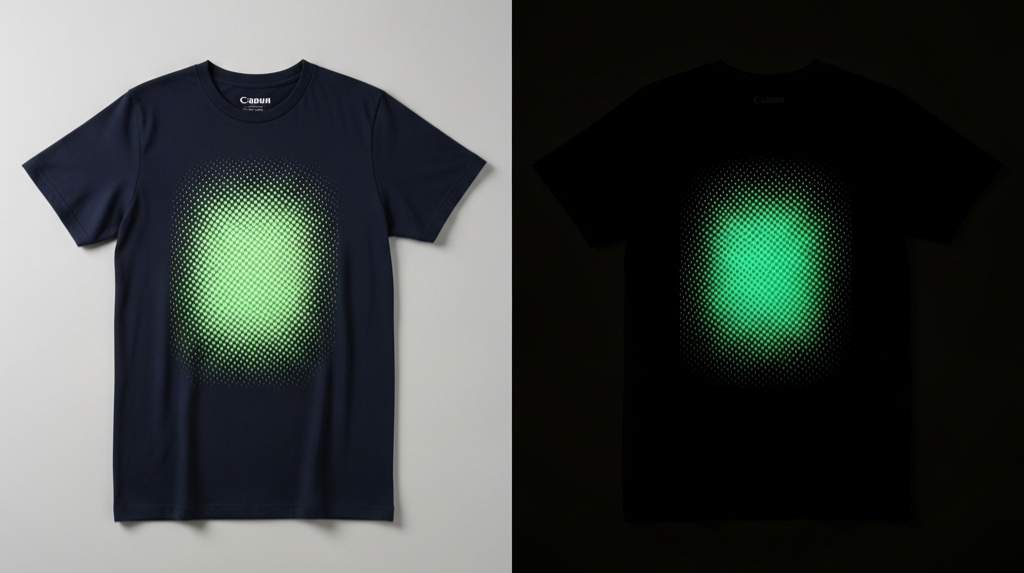
If you've searched "glow in the dark screen printing ink," you're probably picturing a shirt that looks completely normal in daylight and then lights up under a blacklight or after dark — a look that's popular for concert merch, Halloween runs, kids' apparel, and anything meant to stand out at a night event. Here's how the ink actually works, what it takes to print with it, and when it's worth having a shop run it for you instead.
Disclosure: This post may contain affiliate links — if you buy through them, we may earn a small commission at no extra cost to you.
How glow in the dark screen printing ink actually works
Glow in the dark ink uses phosphorescent pigment mixed into a plastisol or water-based ink base. The pigment absorbs light (either ambient light or, more effectively, direct UV/blacklight exposure) and slowly re-emits it as a visible glow once the lights go out.
The brighter and longer the "charge," the stronger and longer-lasting the glow — a design charged under a blacklight for a minute will glow noticeably brighter than one that only picked up a few seconds of ambient room light.
Because the phosphorescent pigment is fairly coarse and opaque, glow ink prints thicker than standard ink and usually needs a heavier mesh count and often a white or light-colored underbase (especially on dark garments) to get a strong, even glow.
What it takes to print with glow ink yourself
Glow ink behaves differently enough from standard plastisol that it's worth knowing what you're getting into before ordering a batch:
Mesh count — a coarser mesh (lower count) than you'd use for standard ink, since the pigment particles are larger and can clog fine mesh.
Underbase — an opaque white underbase is usually necessary on dark shirts to get a bright, visible glow; skipping it noticeably weakens the effect.
Curing — glow ink still needs to be properly heat-cured like standard plastisol, and under-curing affects both durability and how well the ink holds its glow properties over repeated washes.
Ink cost — glow pigment is more expensive than standard plastisol, and thicker deposits use more ink per print, so per-shirt cost runs higher than a standard one-color design.
Rapid Cure® Screen Printing Ink Glow in the Dark (8oz) is the one we'd point people to — it's a plastisol ink made specifically for screen printing (not a craft paint), fast-curing, and made in the USA. Check current price.
110 Mesh (43T) Silk Screen Printing Fabric, 3 Yards is a solid pick for this — high tension mesh at a low enough count to handle the thicker glow ink deposit without clogging. Check current price.
Design considerations
Bold, simple shapes work best — fine detail tends to lose definition once the thicker ink deposit is involved, similar to how puff or specialty inks behave. Designs meant to be seen glowing (rather than just as a novelty detail) usually cover more surface area, since a small logo-sized glow print is far less dramatic than a larger design.
When it's worth having it printed for you
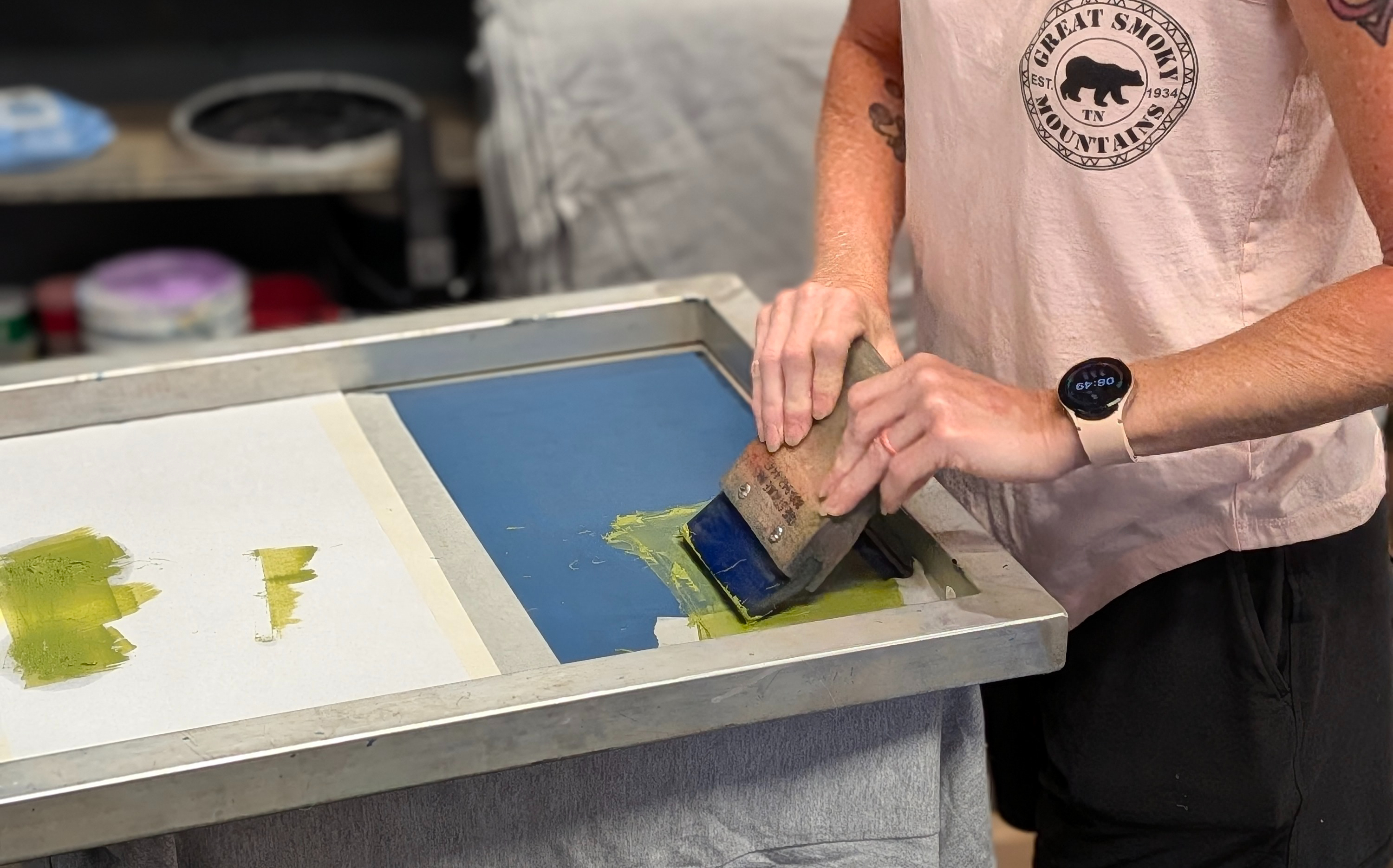
Glow ink is one of the more finicky specialty inks to dial in — getting the mesh count, underbase, and cure right on your own equipment usually takes some trial and error, and a poorly cured or under-charged print can look disappointing compared to what the ink is actually capable of. If you're ordering shirts for an event, a band, or a product line and need them to look right the first time, it's often worth having a shop that already runs specialty inks regularly handle it.
That's something we do at WC Apparel — WC Apparel screen printing services if you want to see what we can do with glow ink, or Contact WC Apparel for a quote if you've got a design and event date in mind.
FAQ
How long does glow in the dark ink glow for?
It depends on how well it was charged — a few minutes of strong light exposure (especially UV/blacklight) produces a brighter, longer glow than brief ambient light, typically fading noticeably within 20–30 minutes either way.
Does glow in the dark ink wash out?
Properly cured glow ink holds up reasonably well to washing, though the glow intensity does gradually diminish over the life of the shirt, faster than the printed color itself fades.
Can glow ink be combined with regular colored ink in the same design?
Yes — glow ink is often used as one color within a multi-color design, commonly layered under or alongside standard colors so the design looks normal in daylight and reveals a glowing element in the dark.
Does glow in the dark ink work on all fabric colors?
It works on any color, but the glow is most visible and consistent on dark garments printed with a white underbase beneath the glow ink — on light-colored shirts the daylight contrast is lower but the glow effect itself is similar.
Is glow in the dark screen printing more expensive than standard printing?
Usually yes, due to the higher cost of the pigment itself and the thicker ink deposit required — expect a noticeable price difference compared to a standard one-color print.